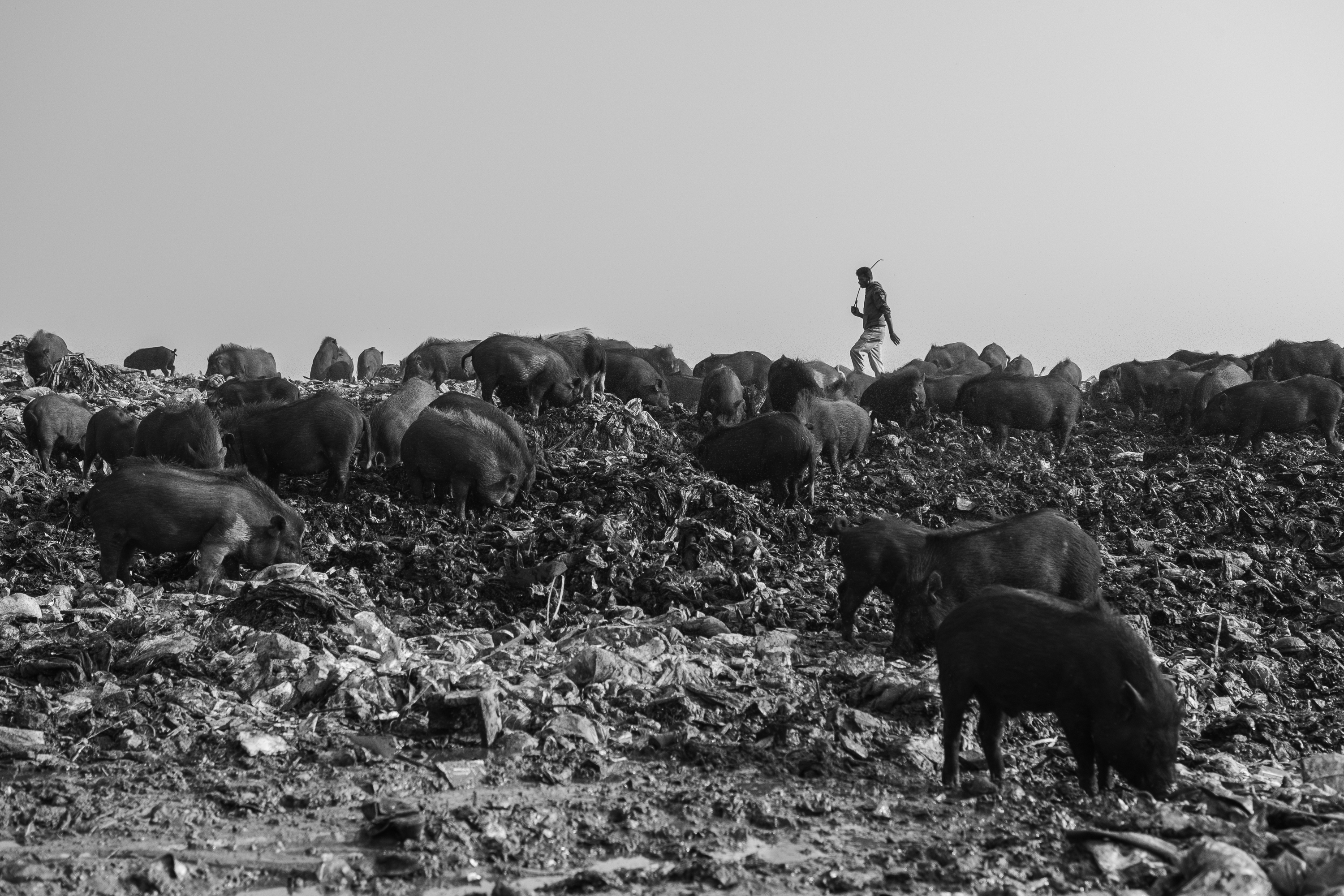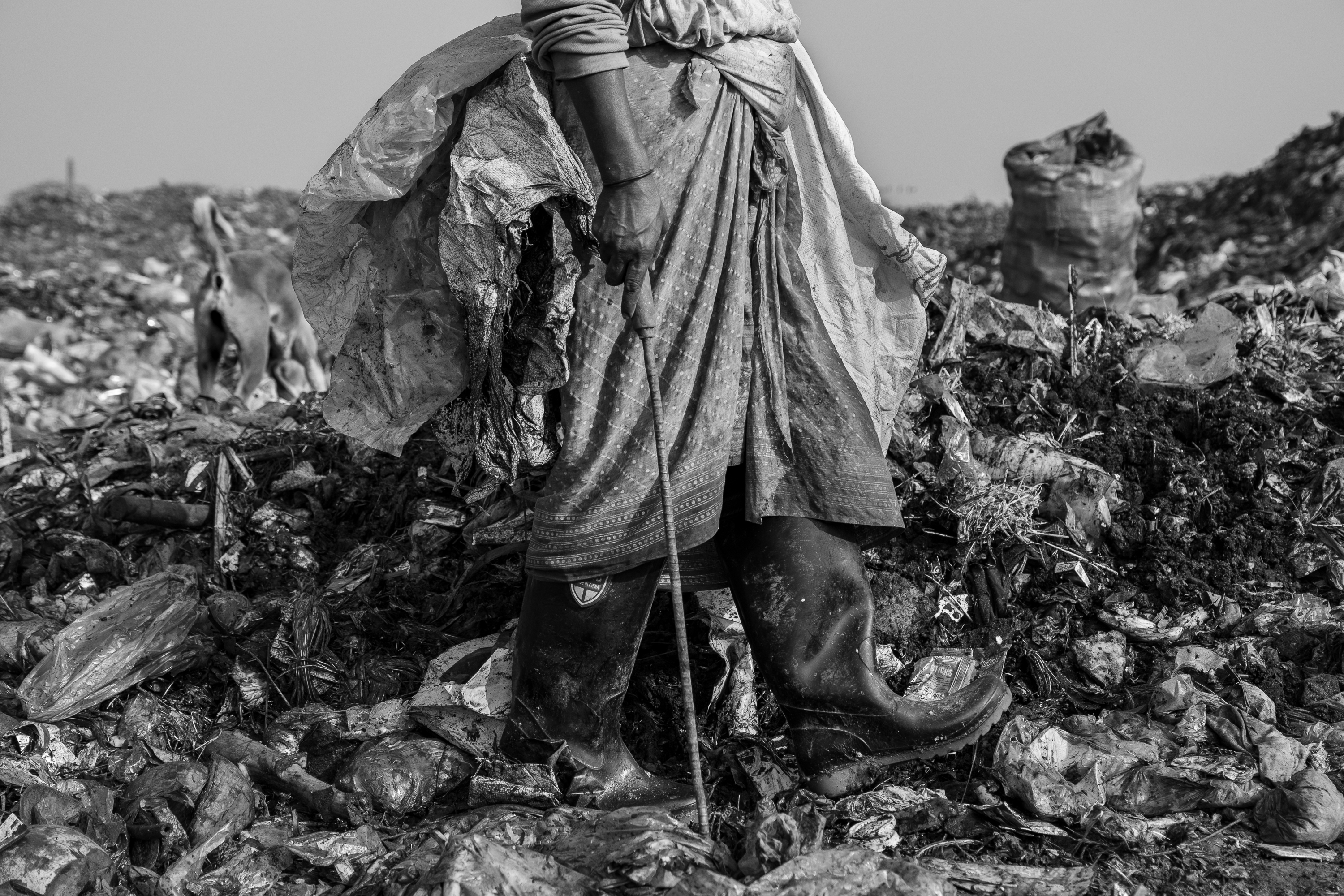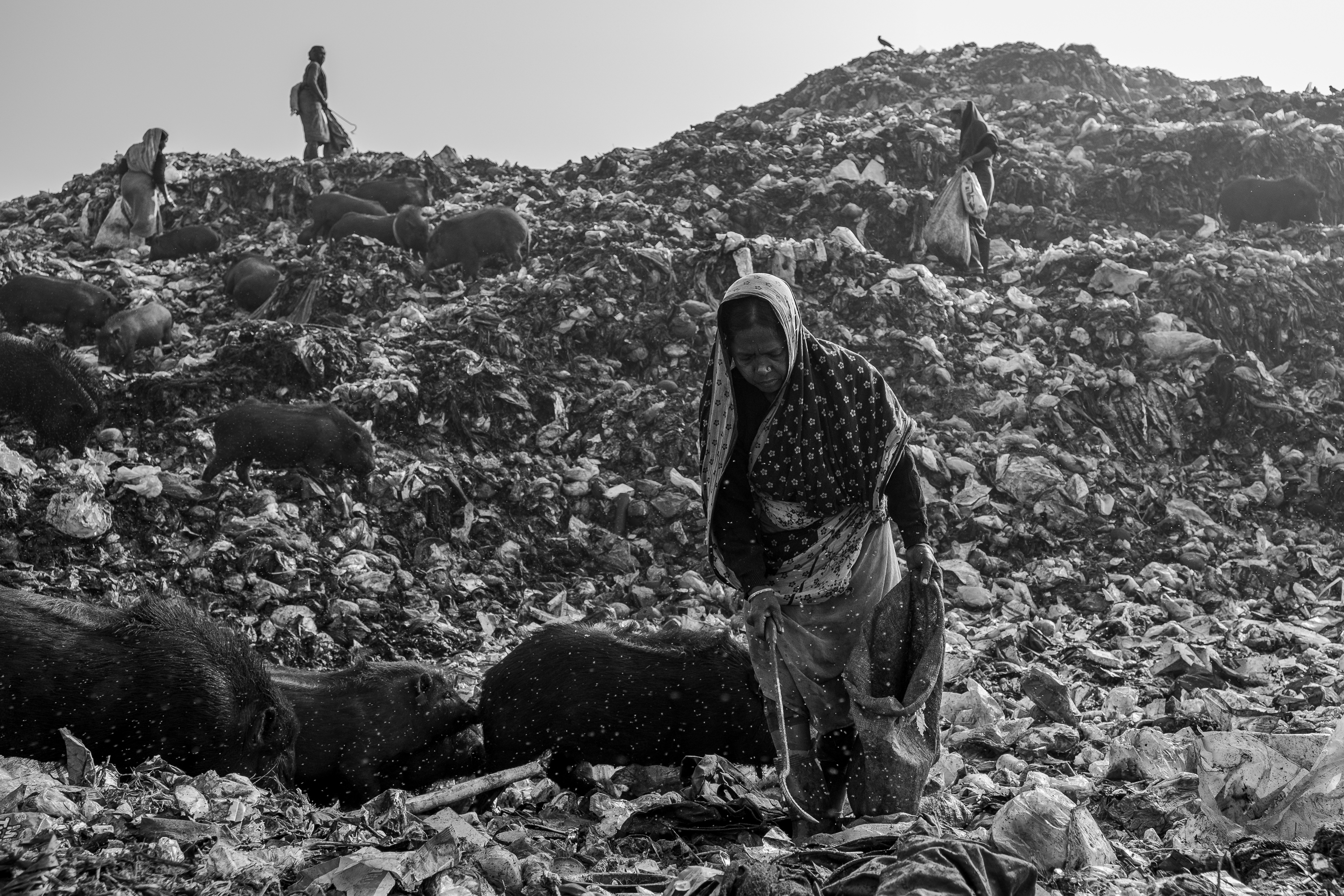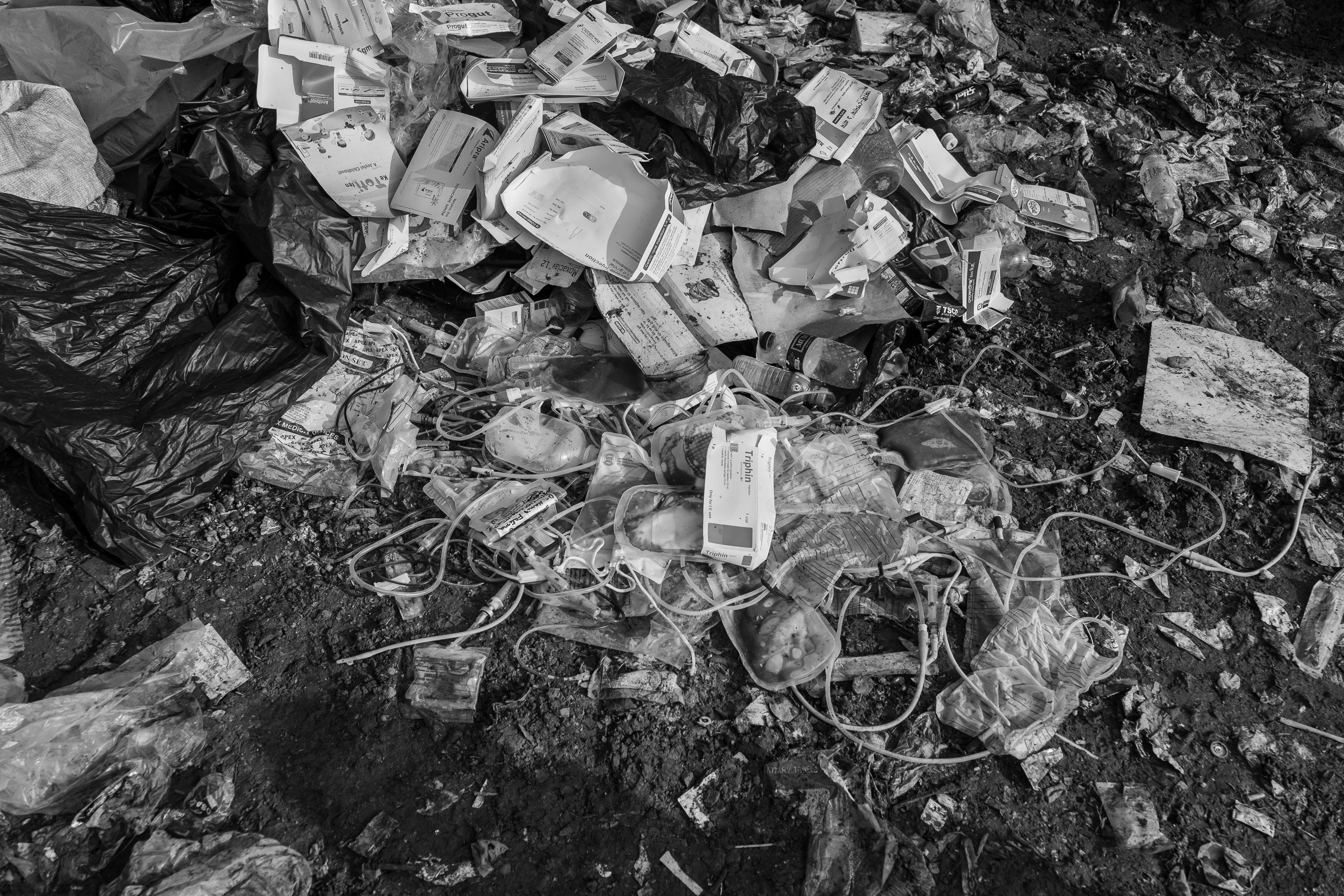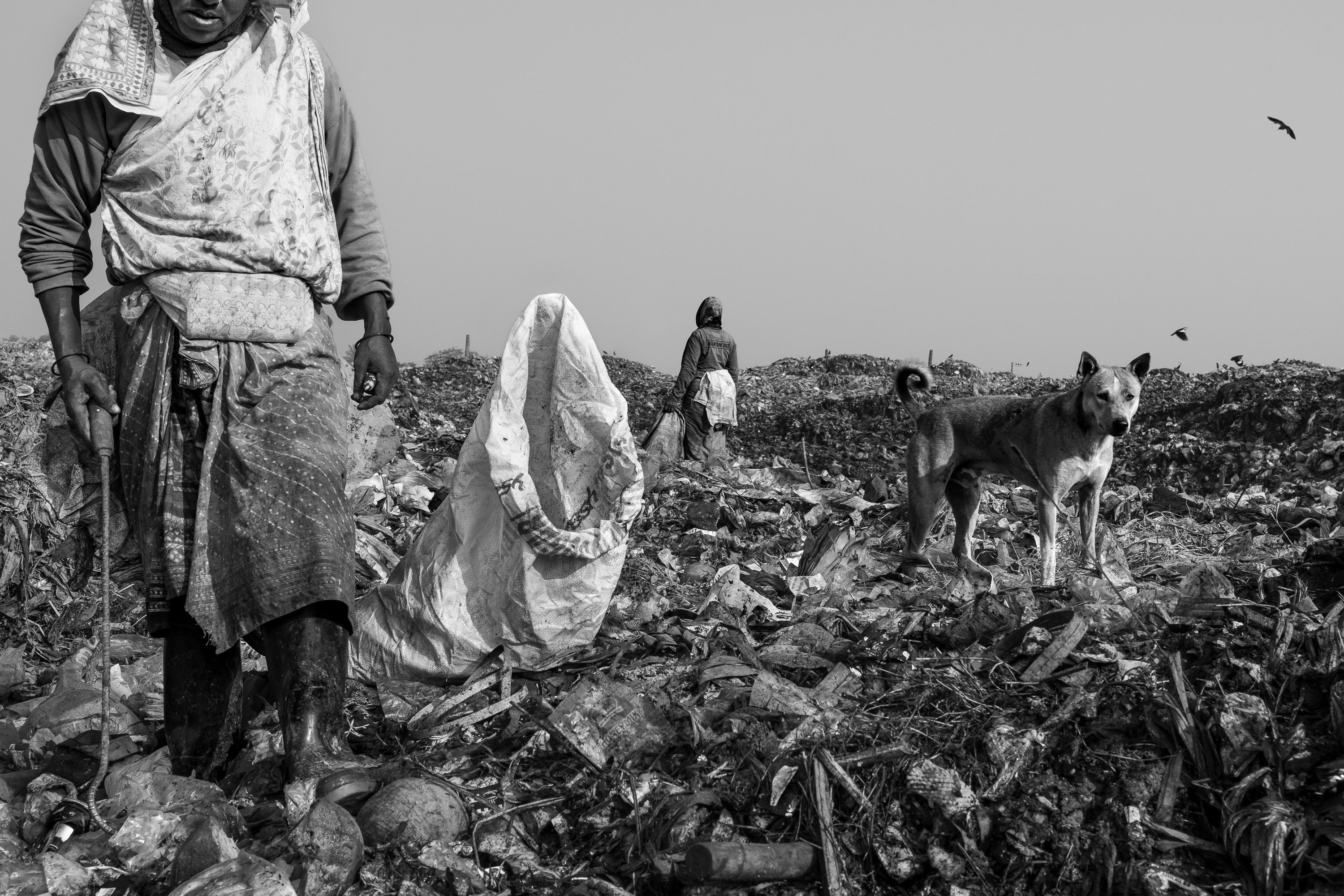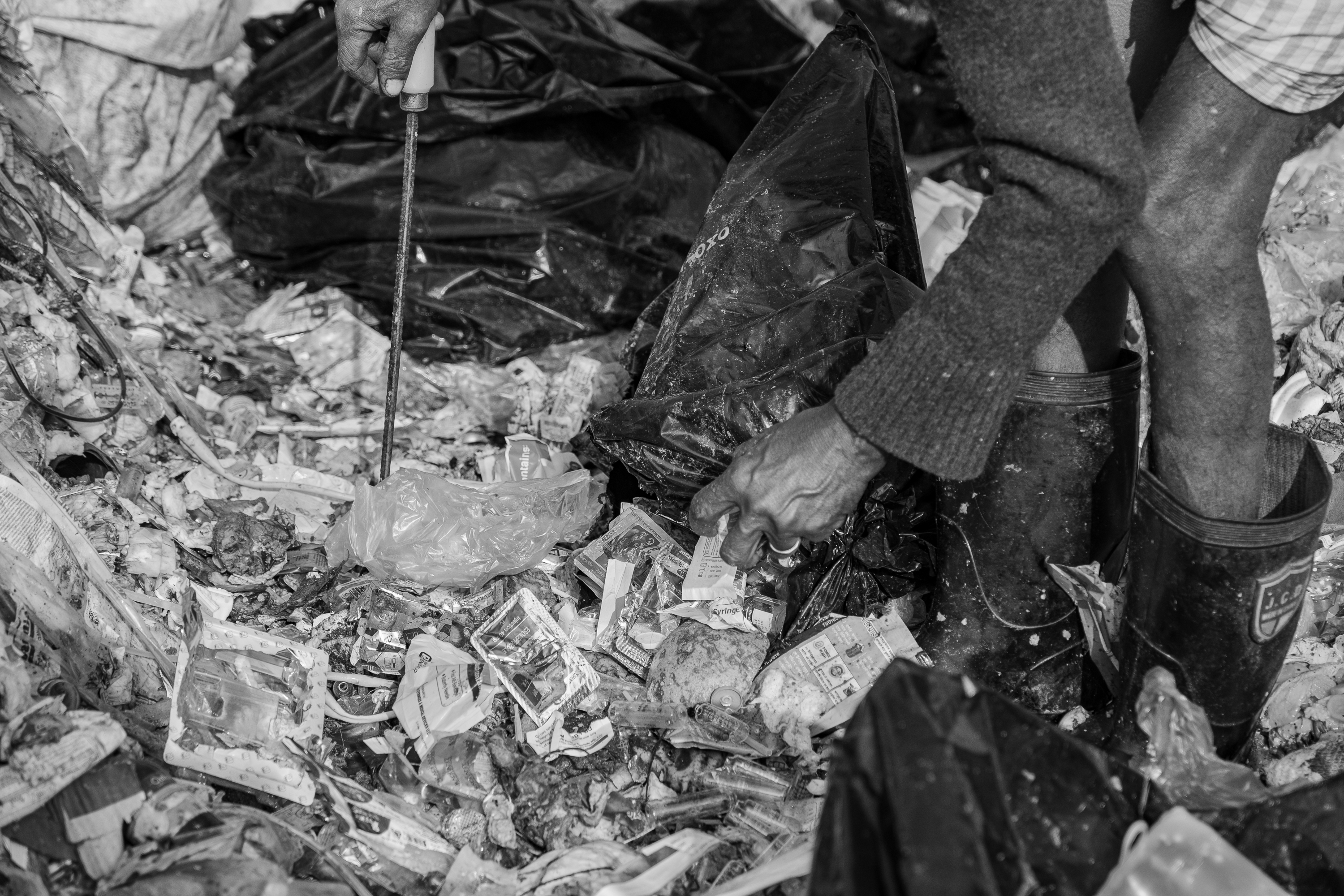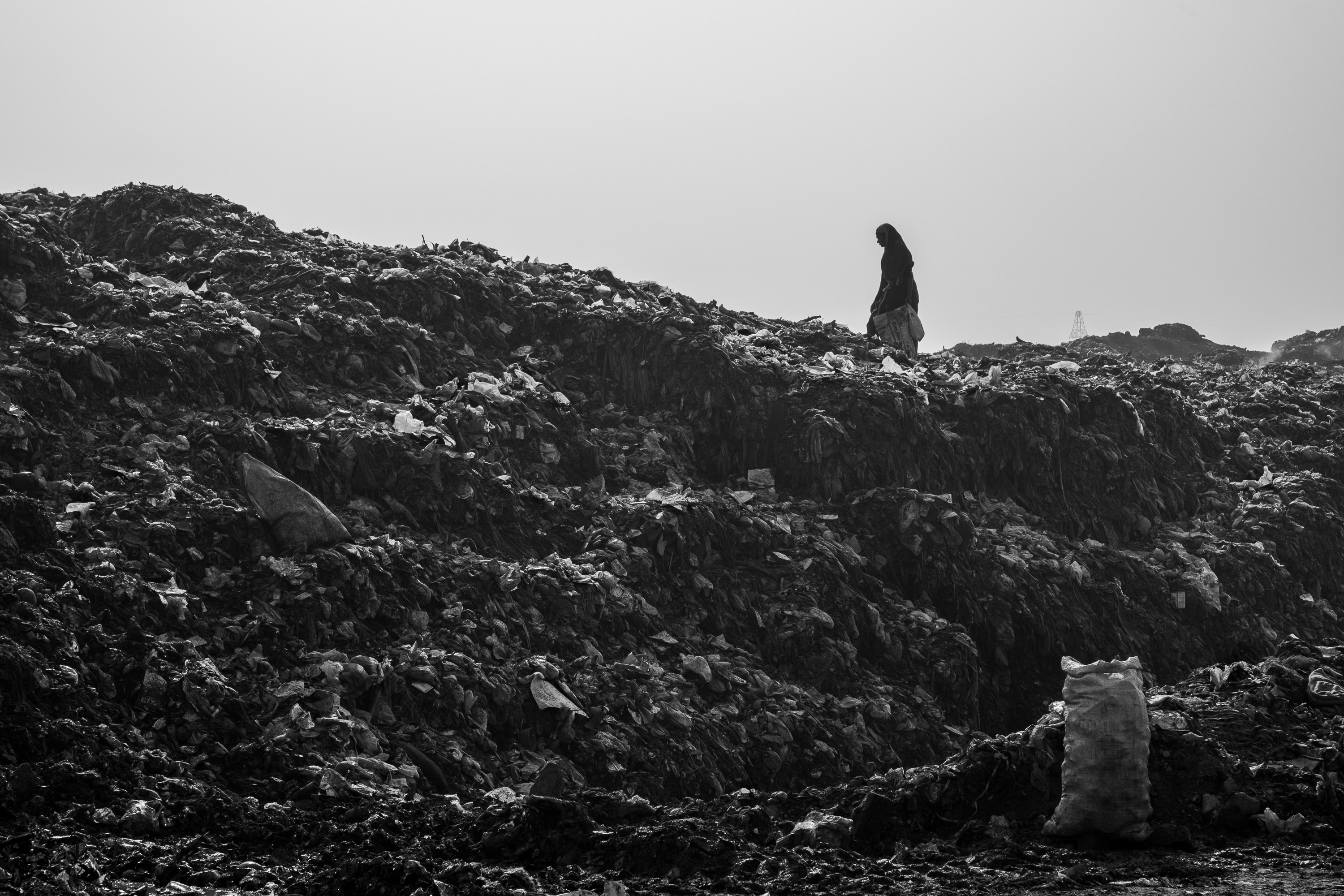
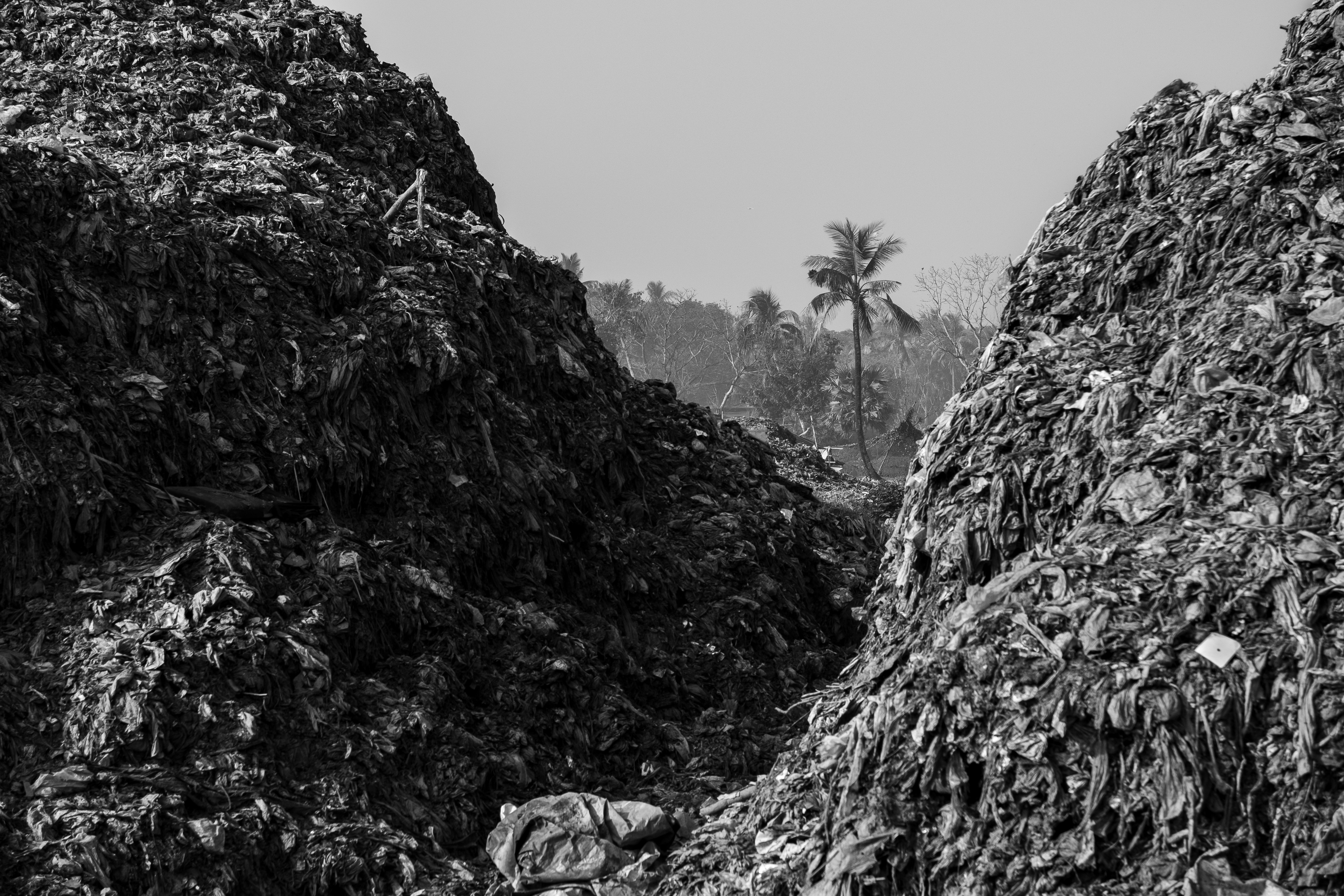
Alex Ng This is a mature and carefully constructed photo essay that rewards close viewing. Landfills are not an uncommon subject, and many such essays become repetitive, showing endless scenes of waste without adding much new information. This series goes further by gradually building a story. The opening image is especially strong. Without knowing the location, it could almost be mistaken for a landscape photograph: two “mountains” forming a valley with trees in the distance. Only on closer inspection do we realise that the entire landscape is made of waste. That visual transformation from landscape to catastrophe is extremely effective. The following images take us progressively deeper into this world: people working among the rubbish, wild boars feeding there, dogs searching alongside humans, and workers with almost no protection. Some handle the waste with bare hands. On closer inspection, the numerous white specks covering people and animals are flies, revealing the appalling sanitary conditions. The image of discarded medical waste is particularly disturbing. At that point, the story moves beyond poverty and pollution into a serious public-health issue. What makes this essay successful is its range of information. Environment, people, animals, survival, health risks and human dignity are all connected through eight distinct images. The photographer does not simply show us waste; the photographs build a story, and that is what makes this photo essay work.
Mountains of waste stretch as far as the eye can see. People sift through discarded leftovers, collecting anything that can be reused or sold. They work in hazardous conditions amid toxic fumes, sharp debris, and unprotected contact with medical waste. Alongside them, dogs and wild boars rummage through the heaps of garbage. Extreme poverty and the lack of prospects have reduced the needs of both humans and animals to the most basic level. Yet these risks remain essential for survival