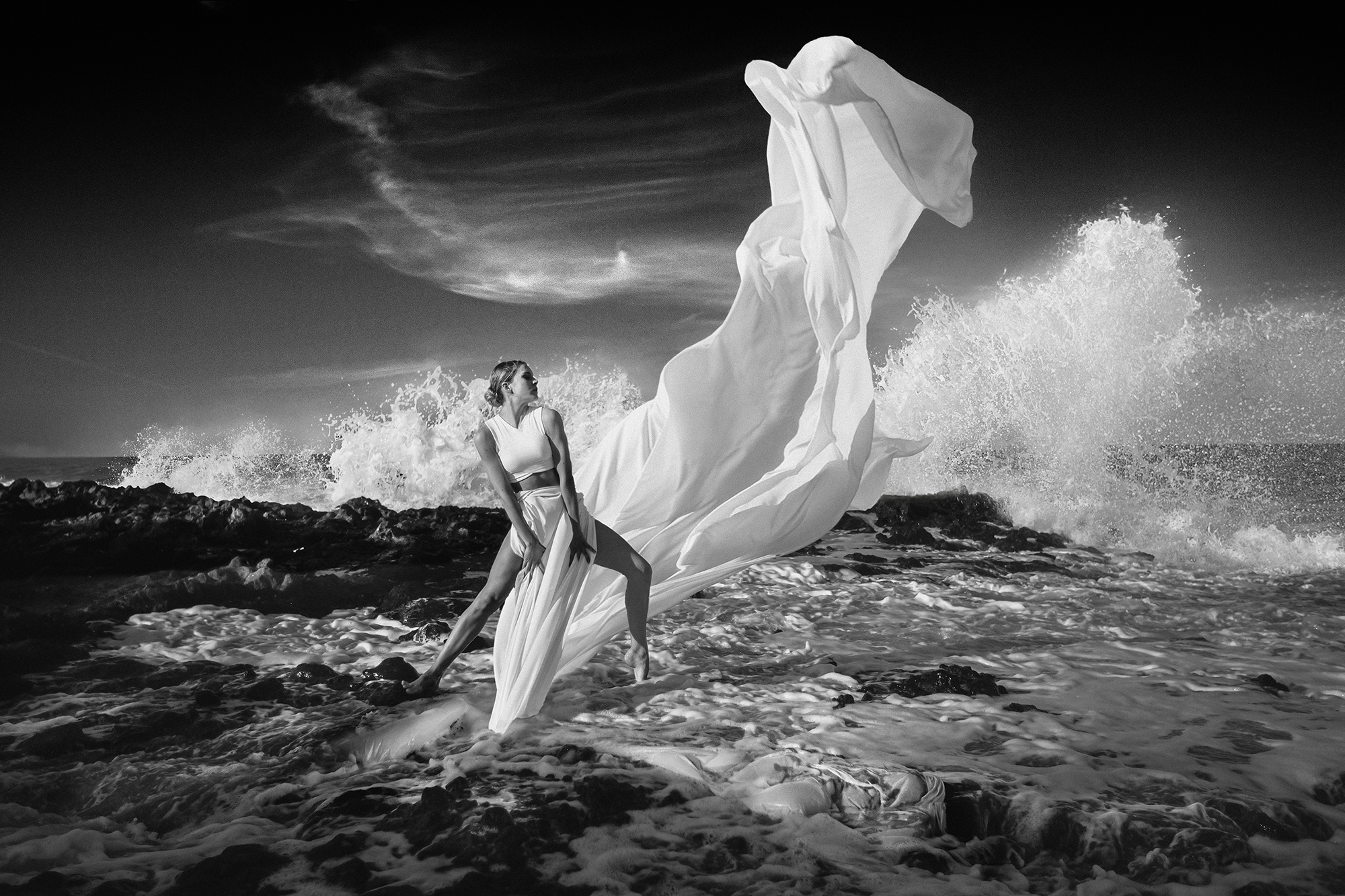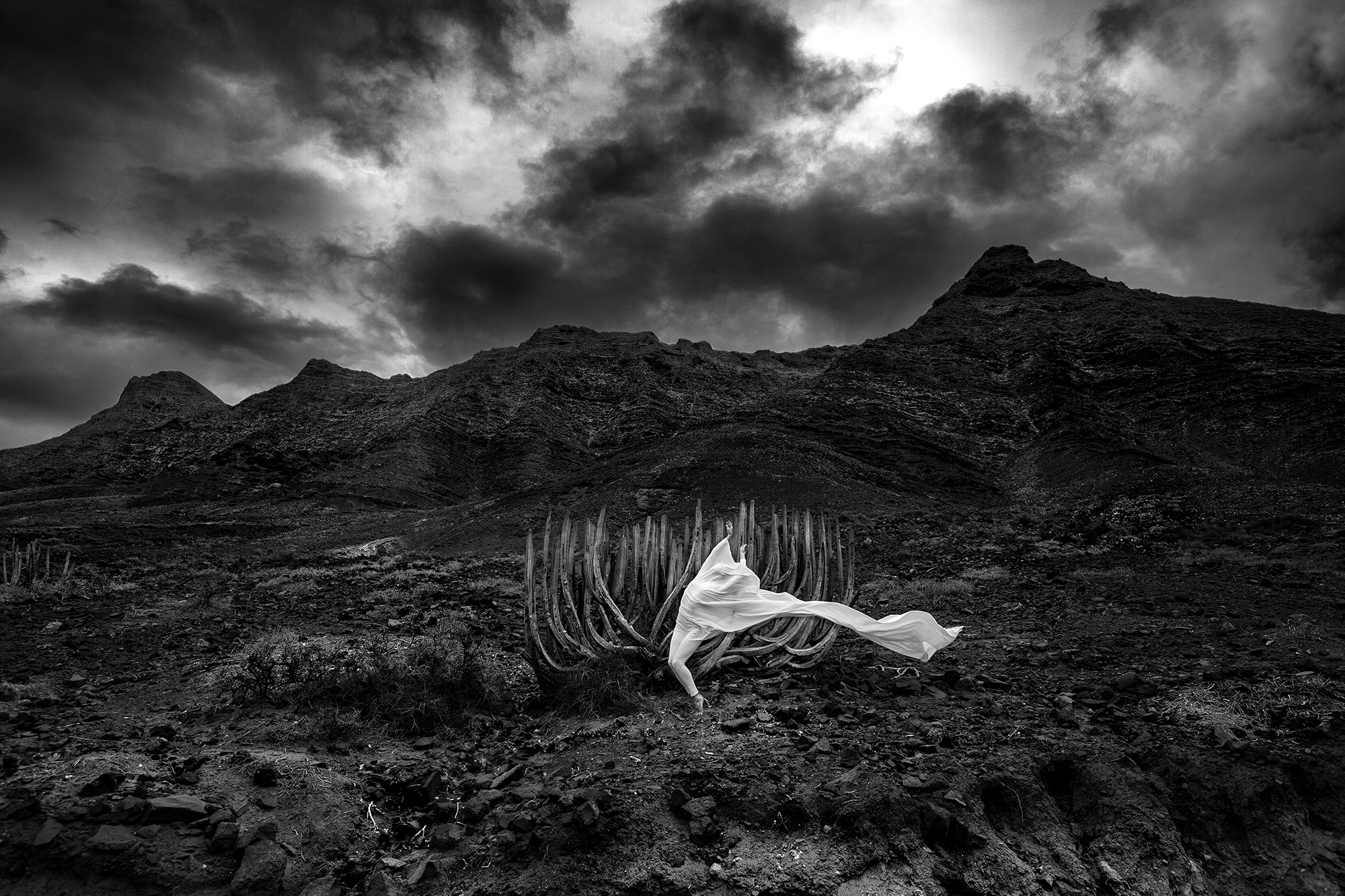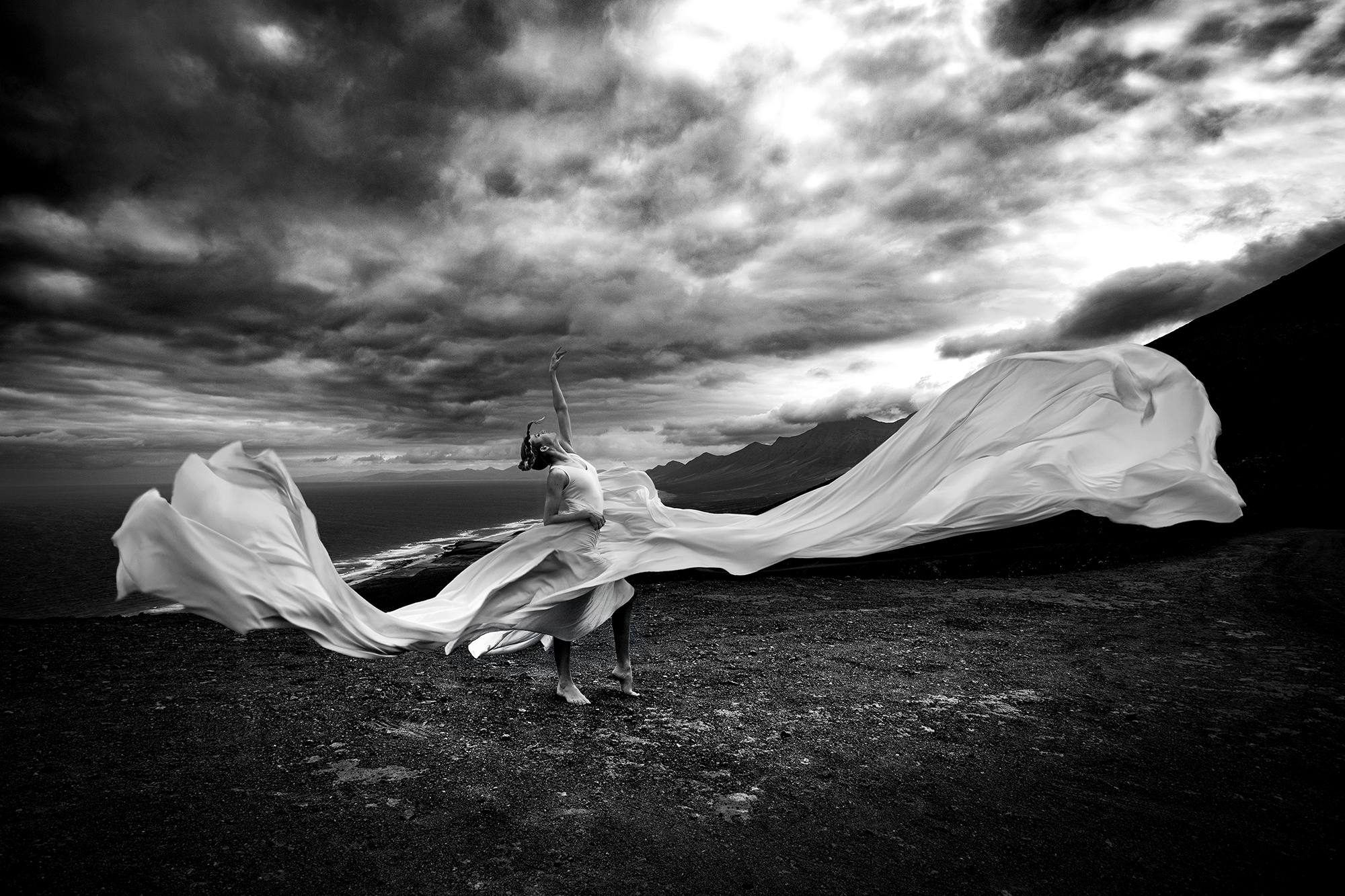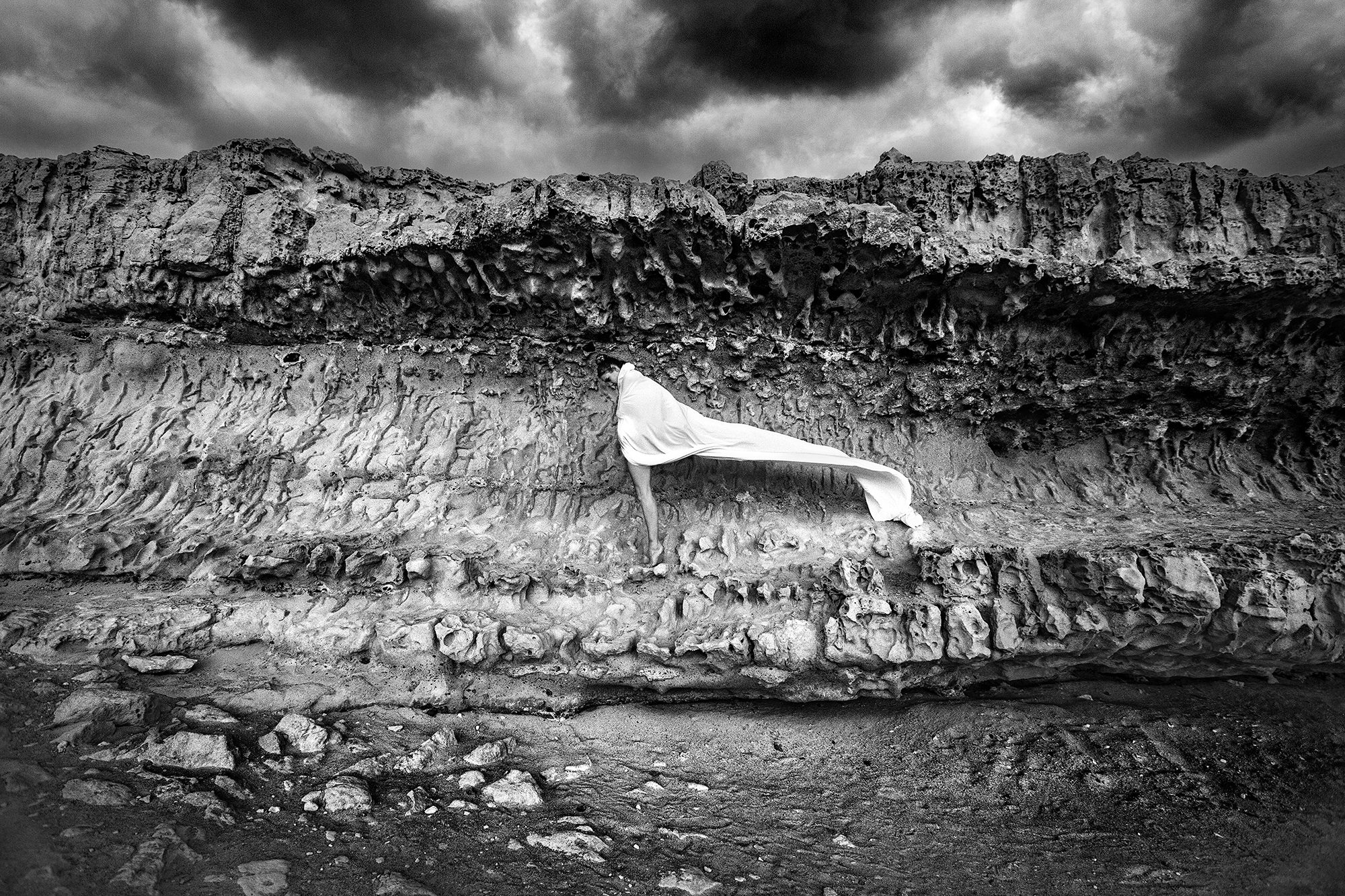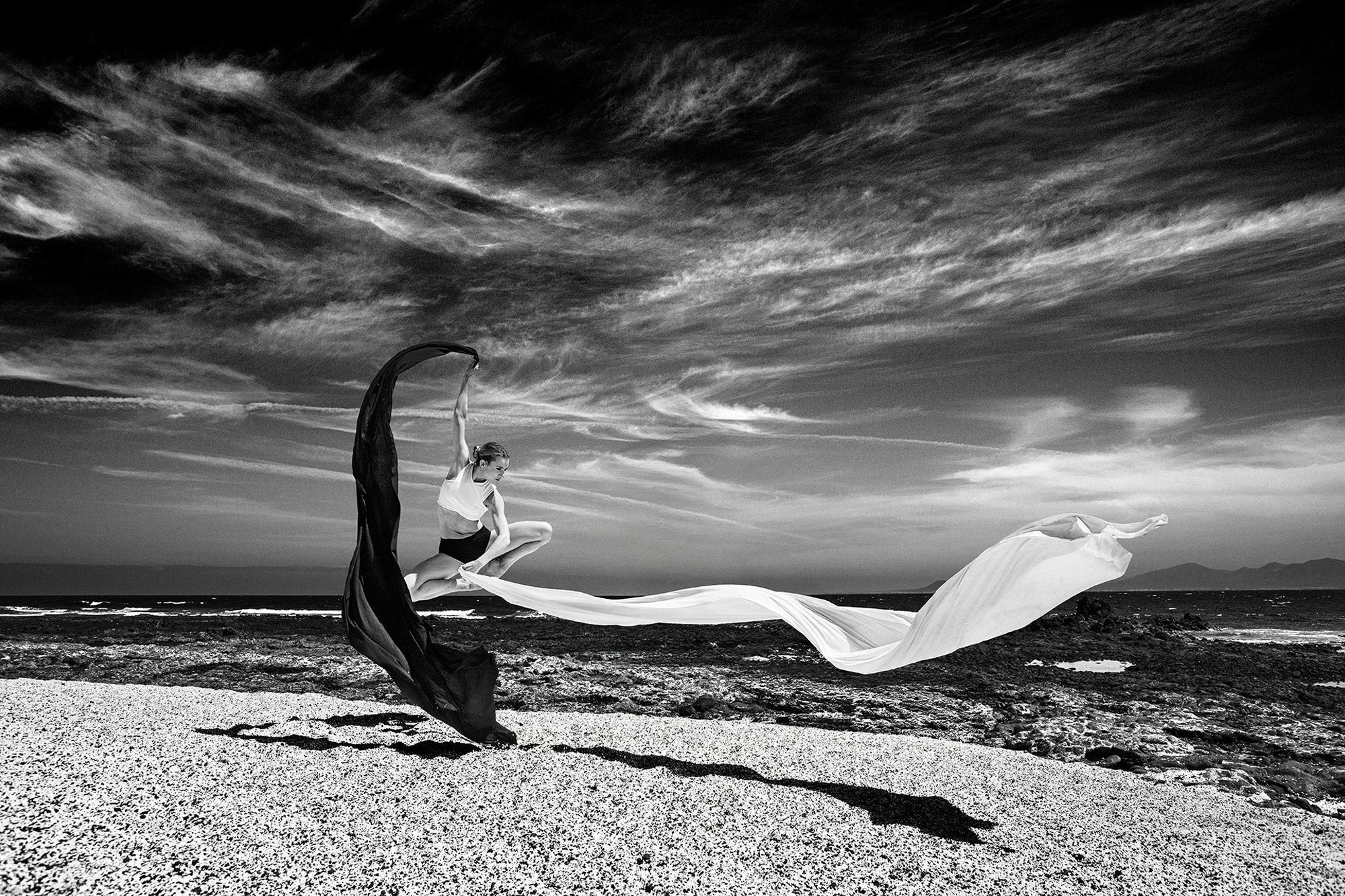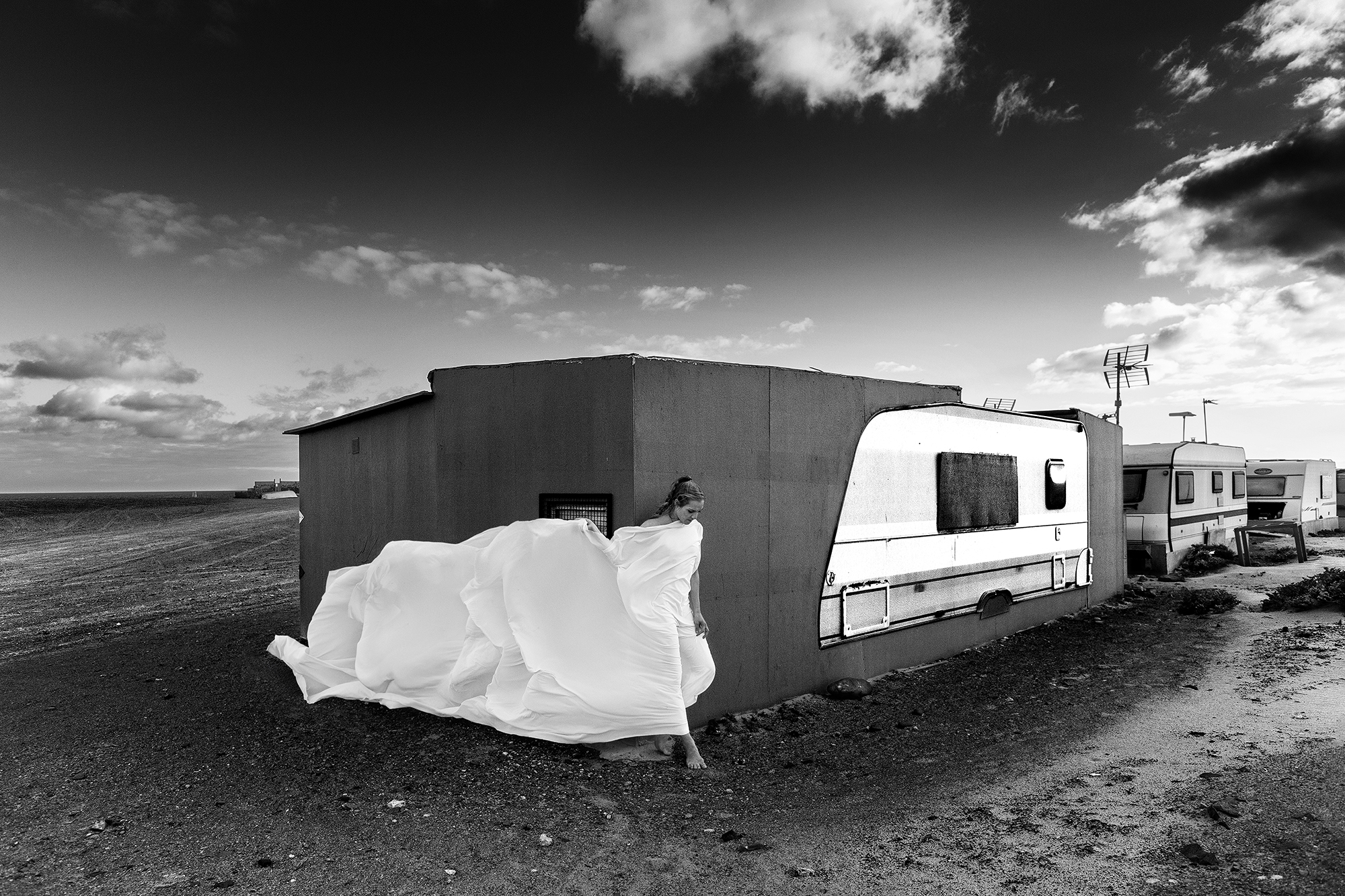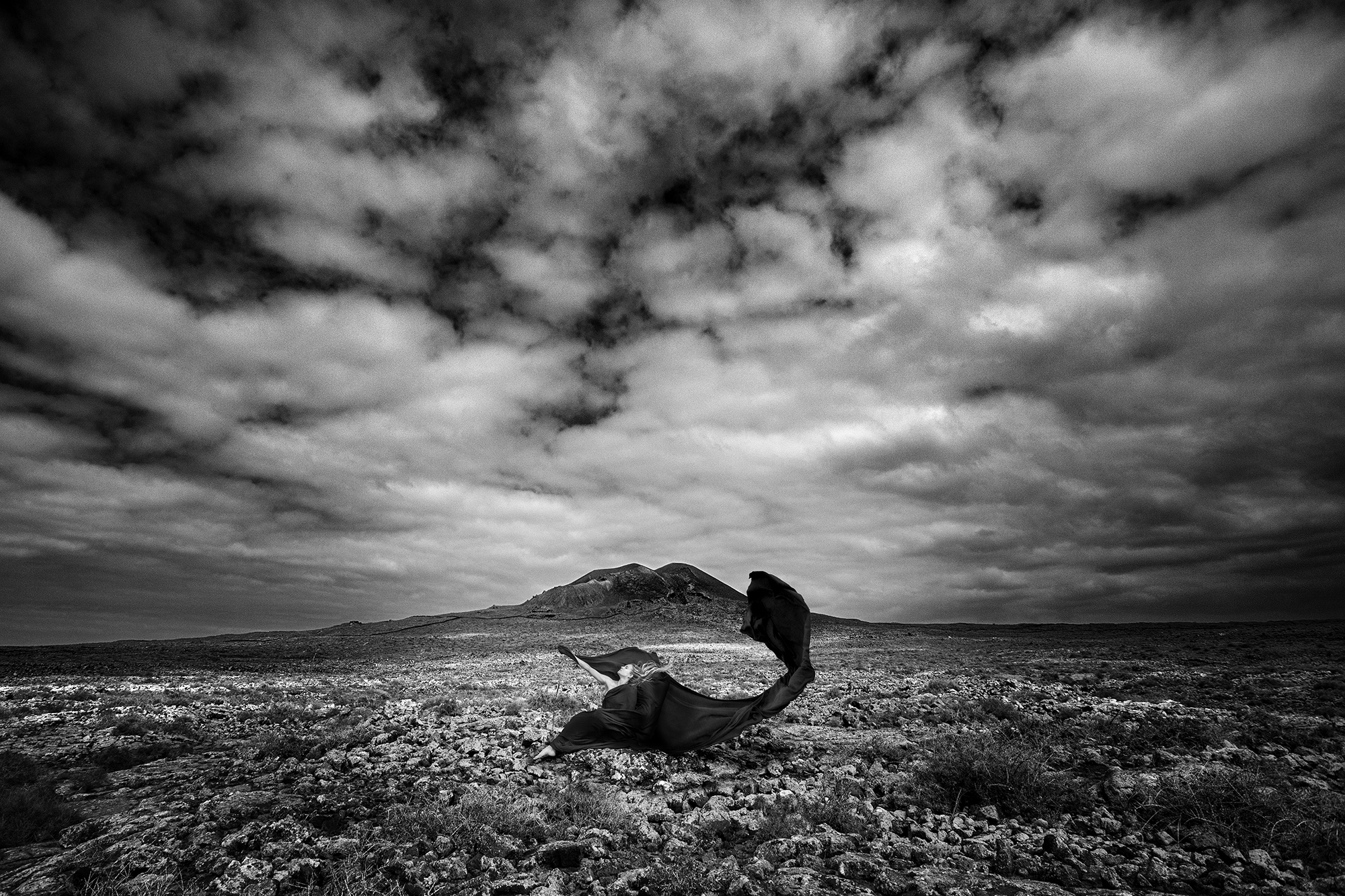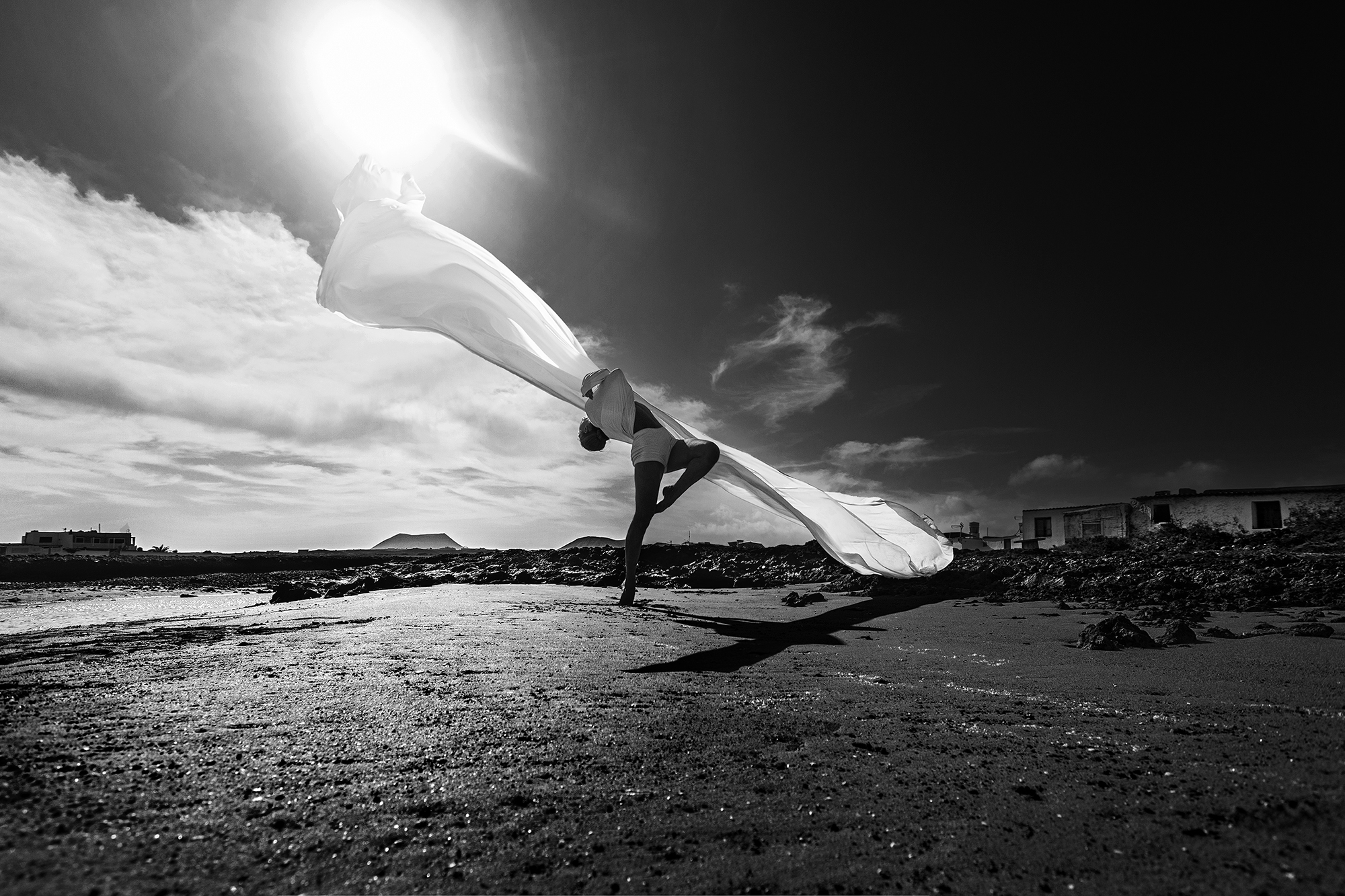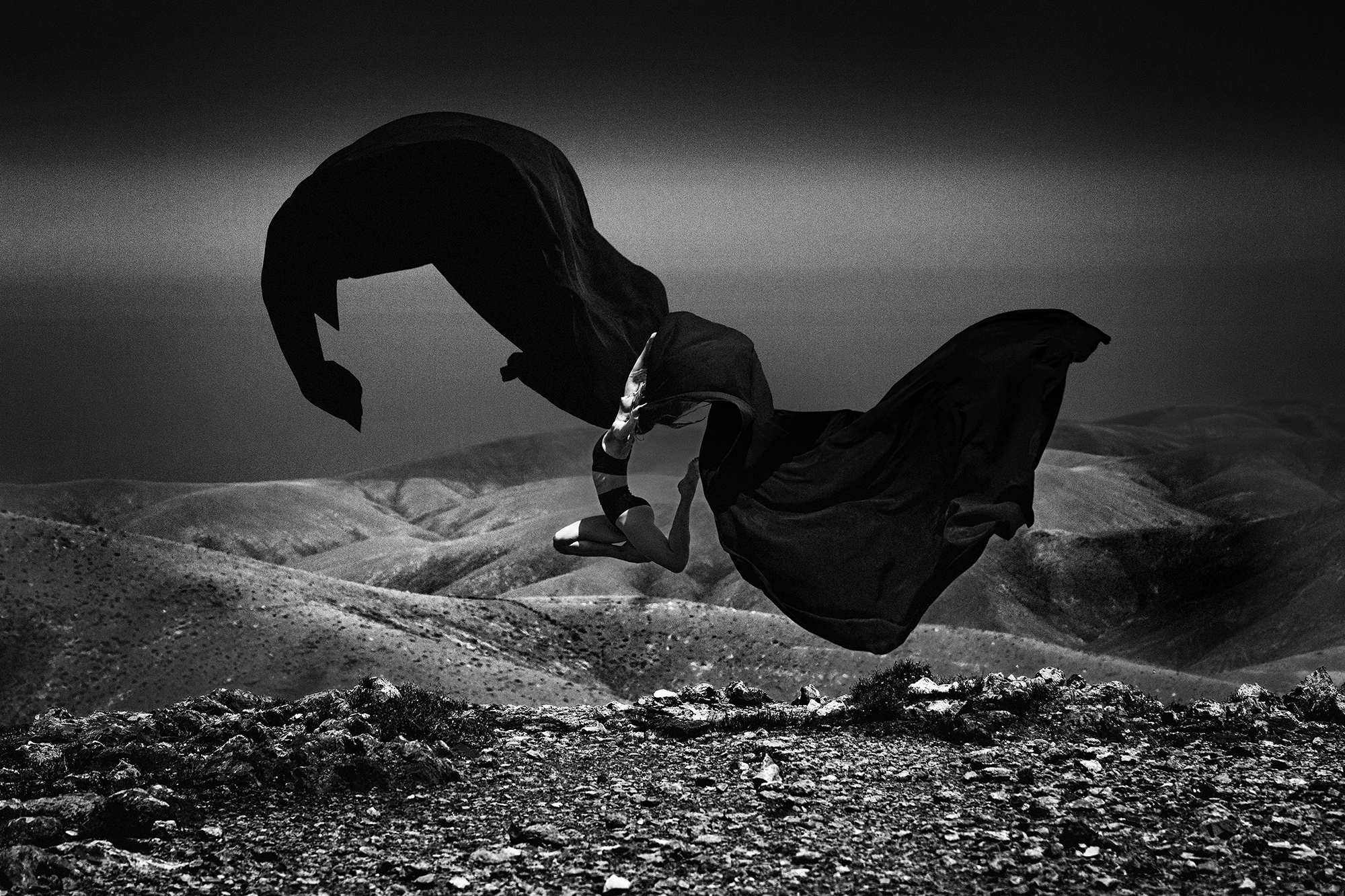
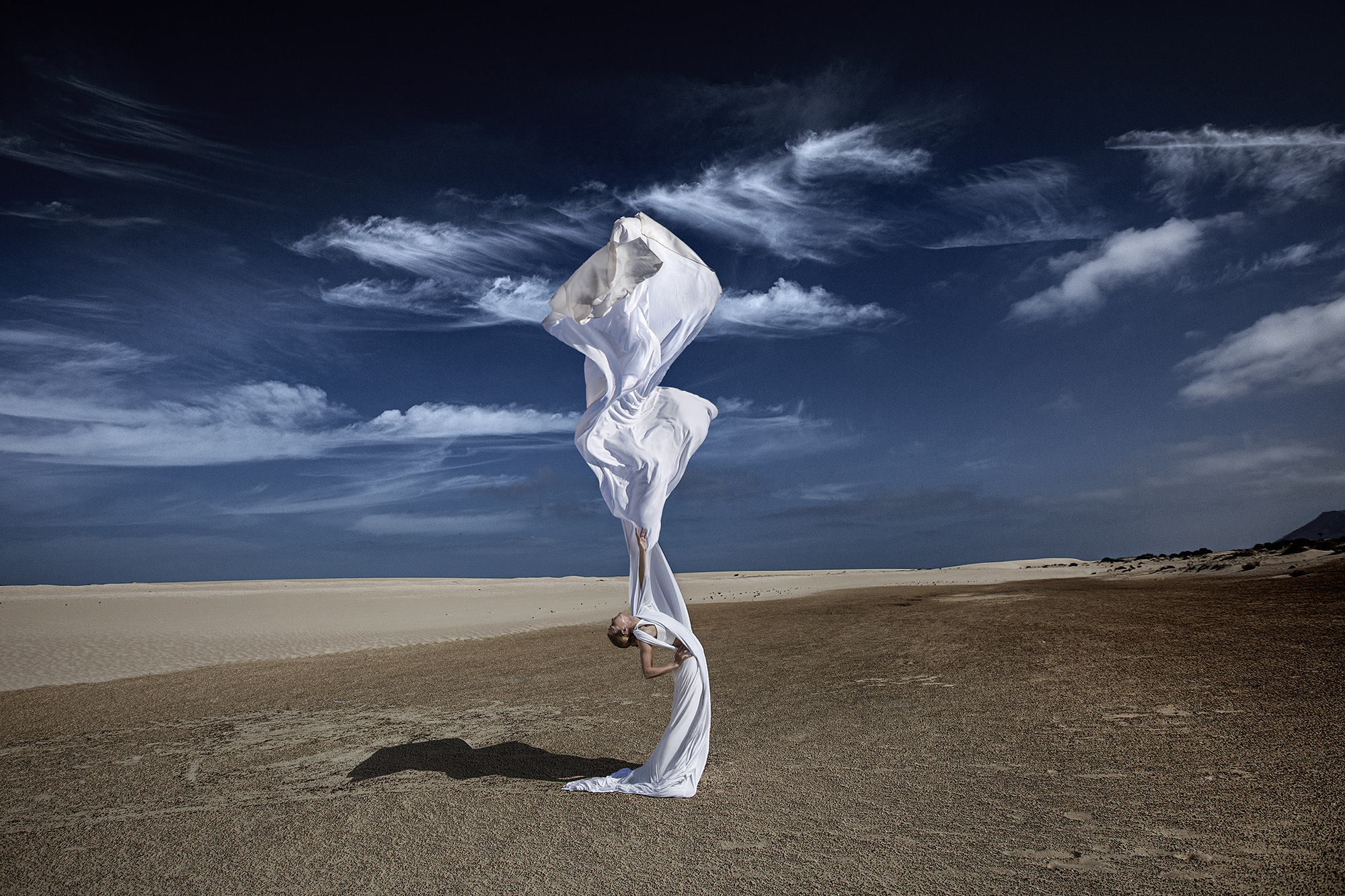
Kirk McKoy A dancer and a wind become one—figures braided into the landscape as billowing fabrics unfurl like white flags, spectral sails, and living calligraphy against volcanic ridges and open sky. Light carves the scenes into high-contrast poetry: sharp, flinty rock and gleaming cloth, brooding clouds and shards of sun, turning each gesture into an elegy of motion. The shorelines and scrublands are both stage and antagonist—harsh, elemental, indifferent—yet the human body answers with trembling grace, folding into the gusts and then erupting free. In some frames the fabric floats like a mythic spirit; in others it snaps like a whip, mapping wind’s invisible architecture and the slow choreography of endurance. Together they transform Fuerteventura’s austerity into a hymn to movement—raw, intimate, and impossibly alive.
At the end of the 1980s, after crossing from Lanzarote, I first arrived in Fuerteventura. The wind—warm from Africa, cool from the ocean—entered me without asking permission and has never left me since. In 2020, I met Rebecca Erroi, a professional dancer and performer. Together we created a project exploring the relationship between body and landscape, where wind becomes a symbol of transformation, movement, and dialogue with space. It all began there, in a place that does not welcome you—it captivates you.